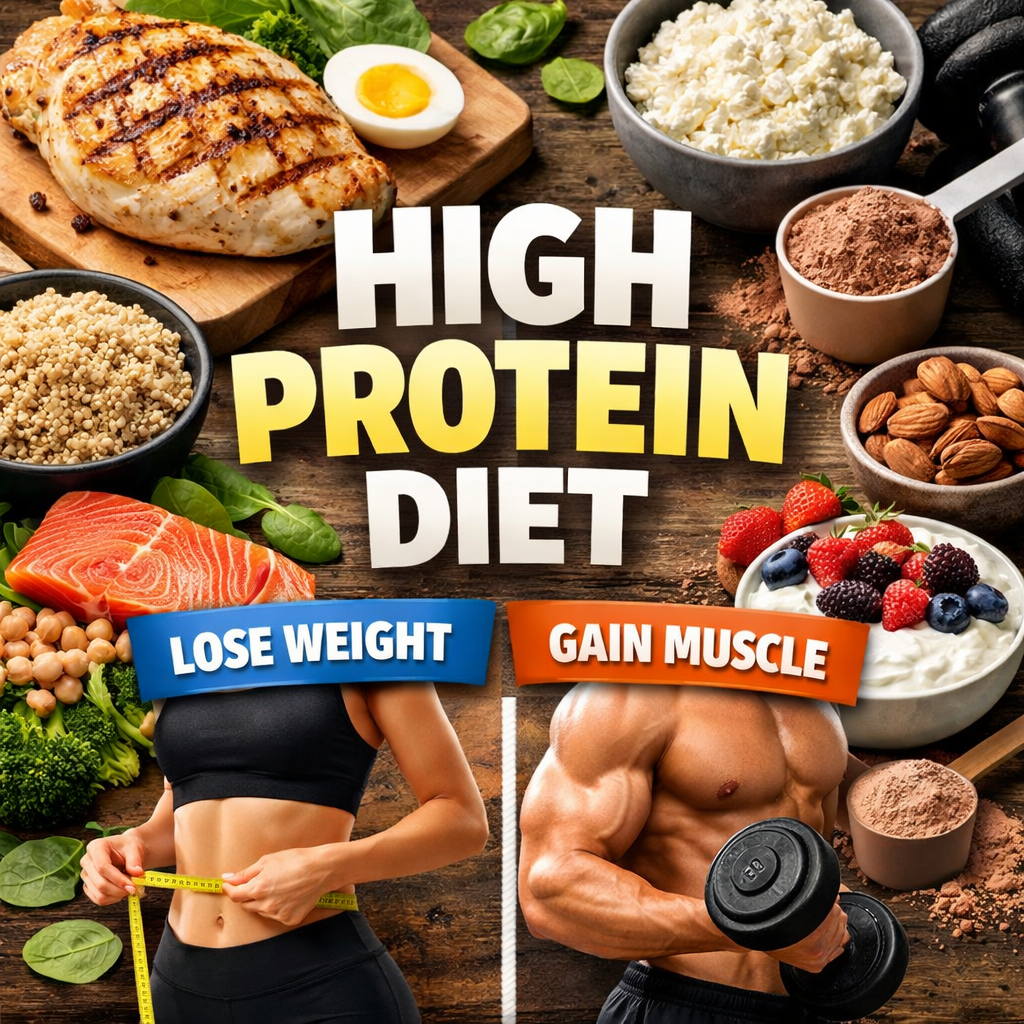
A High Protein Diet is one of the most effective strategies for fat loss, muscle building, and improving body composition. But simply increasing protein intake is not enough.
To get the best results, you must understand:
- How much protein to eat
- When to increase and decrease protein
- How to train properly
- Training intensity
- Weekly structure
- Recovery and optimization
This complete guide explains everything step-by-step.
What Is a High Protein Diet?
A High Protein Diet means increasing your daily protein intake above average levels to:
- Preserve muscle during fat loss
- Increase metabolism
- Reduce hunger
- Improve recovery
- Build lean muscle mass
Protein has a higher thermic effect than carbs and fats, meaning your body burns more calories digesting protein. This makes High Protein Diets extremely effective for fat loss.
Many athletes and professionals follow structured High Protein plans to maintain performance and improve physique. You can learn more about performance-focused fitness strategies at
https://londonbiolab.com/
How Much Protein Should You Eat?
Your protein intake depends on your goal:
Fat Loss + Muscle Preservation
1.6 – 2.2 grams per kg of bodyweight
Muscle Growth
1.8 – 2.4 grams per kg
Aggressive Fat Loss
2.0 – 2.5 grams per kg
Example
If you weigh 80kg:
Fat loss → 130g – 160g protein
Muscle gain → 150g – 180g protein
Aggressive cutting → 170g – 200g protein
Protein Cycling (Professional Strategy)
Advanced athletes do not keep protein high every day.
Instead, they use Protein Cycling:
Training days → High protein
Rest days → Moderate protein
This helps:
- Prevent metabolic slowdown
- Improve fat loss
- Maintain muscle
Professional training strategies like this are commonly used by athletes focusing on performance and recovery. More advanced training strategies can be found at
https://londonbiolab.com/
Weekly High Protein Diet Structure
4–5 Training Days
High Protein
2.0 – 2.4g per kg
2–3 Rest Days
Moderate Protein
1.2 – 1.6g per kg
This structure helps maintain metabolism and improve fat burning.
Training Style for High Protein Diet
To maximize results, you must train properly.
Best Training Type
Resistance Training
4–5 days per week
Focus on compound movements:
- Squats
- Bench Press
- Deadlifts
- Pull-ups
- Shoulder Press
These exercises stimulate maximum muscle growth.
Athletes using structured nutrition and training plans often see faster progress. You can explore more structured fitness insights at
https://londonbiolab.com/
Training Intensity
The best training intensity:
70% – 85% of max strength
Reps:
8–12 reps
3–5 sets
This is the ideal range for:
- Muscle growth
- Fat loss
- Strength increase
Cardio in High Protein Diet
Cardio should be moderate, not excessive.
Best structure:
3–4 times per week
20–30 minutes
Best types:
- Incline walking
- Moderate cycling
- Fast walking
Too much cardio can reduce muscle mass, especially during high protein dieting.
Balancing training and recovery is key. More guidance on performance and body optimization is available at
https://londonbiolab.com/
Best Time to Eat Protein
Optimal times:
Morning
Post workout
Before sleep
This helps:
- Improve recovery
- Build muscle
- Reduce muscle breakdown
Sample High Protein Diet Plan
Breakfast
Eggs
Greek yogurt
Oats
Lunch
Chicken or beef
Rice or potatoes
Vegetables
Pre-Workout
Light protein meal
Fruit
Post-Workout
Fast absorbing protein
Dinner
Fish or lean meat
Vegetables
Before Bed
Slow digesting protein
Common Mistakes
Avoid these mistakes:
Too much cardio
No resistance training
Protein too high with low calories
Poor recovery
A balanced approach always works best.
If you’re looking to improve your training structure and overall fitness strategy, you can explore additional resources at
https://londonbiolab.com/
Who Benefits Most From High Protein Diet
Best for:
Fat loss
Body recomposition
Muscle gain
Athletes
Men over 30
High protein diets help maintain muscle while losing fat, making them ideal for long-term physique improvement.
For more performance-focused guidance and fitness strategies, visit
https://londonbiolab.com/
How Long Until You See Results
Week 1–2
Better fullness and energy
Week 3–4
Fat loss begins
Week 6–8
Visible body changes
Consistency is the key to long-term results.
Many athletes combine structured nutrition with optimized training strategies to accelerate results. You can learn more about these approaches at
https://londonbiolab.com/
Final Thoughts
A High Protein Diet is one of the best strategies for:
Fat loss
Muscle growth
Better recovery
Improved metabolism
But success depends on:
Training correctly
Proper protein cycling
Controlled cardio
Consistency
If you’re serious about improving your physique and performance, structured nutrition and training are essential.
To explore more performance-focused insights and advanced fitness strategies, visit
https://londonbiolab.com/
Leave a Reply